Reclaim Your Life: Navigating Personal Transitions
Personal Growth, Life Transitions, Self-Discovery
What Happens When the Life You Built No Longer Feels Like Yours?
When Success and Independence Don’t Feel Like the Finish Line
What happens when the life you've built no longer feels like yours, and how reconnecting with yourself can change your next chapter.
Have you ever looked at your life and thought, I should be happy. So why don't I feel it?
Perhaps you've worked hard, built a career or business, navigated relationships and done everything you thought you were supposed to do. You're independent, capable and the person others turn to when something needs sorting out.
From the outside, your life might look absolutely fine.
But inside, something feels missing.
You might feel bored, restless or unfulfilled. You might be craving a change without having the faintest idea what that change should look like.
Perhaps a relationship has ended or is feeling strained, your career has changed, your children are growing up, or you've reached a stage of life where the things that once gave you purpose no longer fulfil you in the same way.
Or perhaps nothing dramatic has happened at all. You simply find yourself wondering whether the life you've built is still the life you want.
And because you've worked hard to get where you are, you might feel guilty for wanting something different.
But here's what I want you to know: you can appreciate the life you've built and still want something more from it.
Wanting change doesn't make you ungrateful. It might simply mean you're ready to discover what comes next.

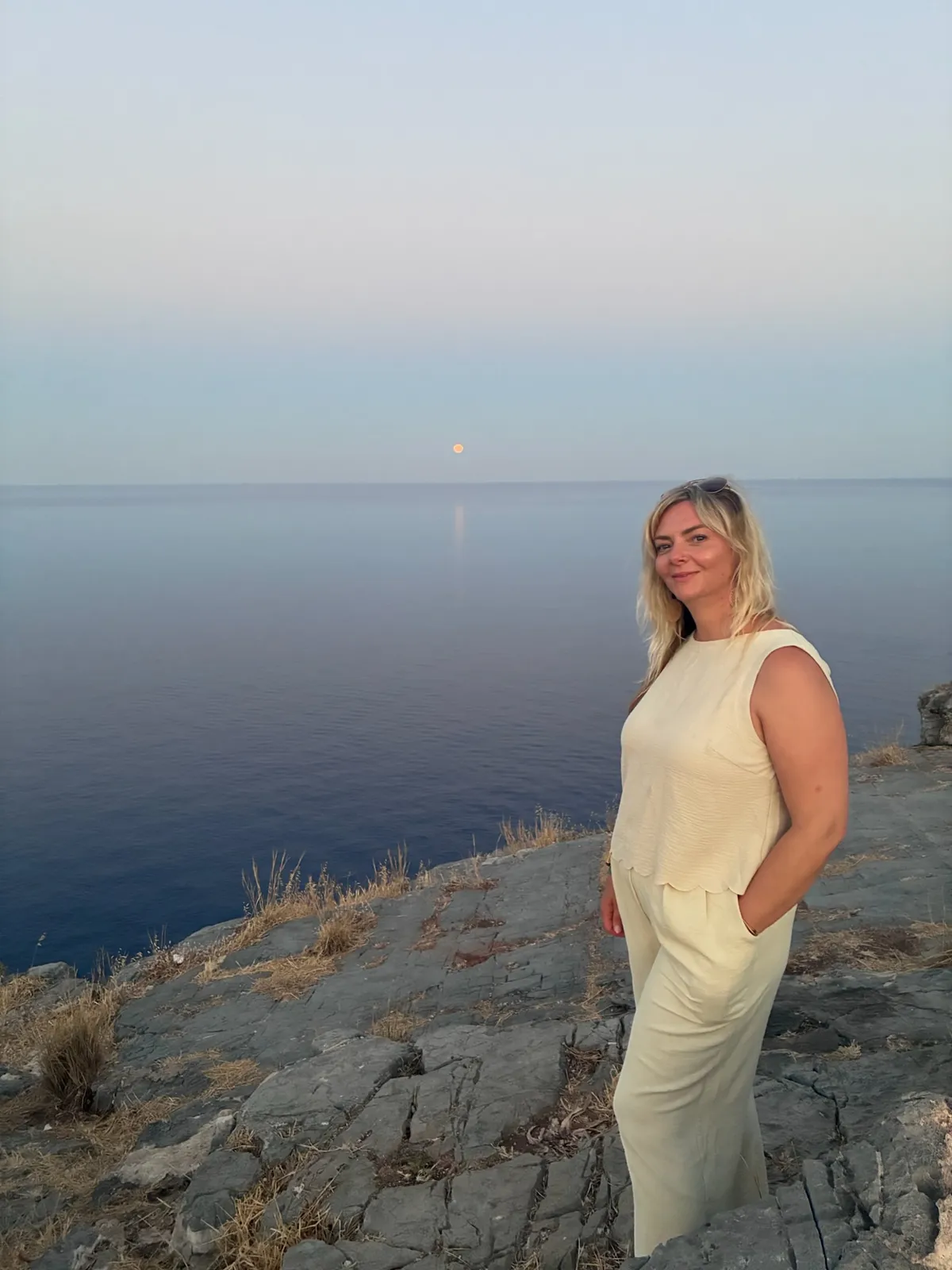
Simple moments of reflection often reveal how your identity is quietly evolving.
When the identity you've built no longer fits
I recently worked with a woman I'll call Joanna, who had spent years building a successful business.
She was capable, driven and used to making things happen. Her work had given her purpose, direction and a strong sense of identity.
But after selling her business and moving into a new chapter of life, she found herself facing a question she hadn't needed to ask for years.
What now?
She described feeling bored and confused about what she was supposed to do next. The identity she'd built around her work had changed, and she was trying to work out what her life should look like without it occupying the same place.
It wasn't simply a case of finding another project to keep herself busy.
She needed to work out what she actually wanted.
Who was she now? What mattered to her? What would make this next chapter fulfilling?
These questions can surface at many points in life. Retirement, a career change, a strained realtionship, divorce, children leaving home or simply reaching a milestone birthday can prompt us to reconsider who we are and where we're heading.
Sometimes, the roles that once gave us purpose no longer fit in quite the same way.
And when you've spent years being the capable one, the achiever or the person who holds everything together, it can be surprisingly difficult to know who you are when those roles change.
You might know how to build a business, raise a family or make a relationship work. But when it comes to asking what you want, the answer might not come so easily.
You haven't lost your potential. You may simply have lost sight of yourself beneath all the roles you've been playing.
When being the strong one means putting yourself last
There was another important part of Joanna's story.
She was someone who knew how to fix things. If a business needed sorting out, she could find a solution. If something needed organising, she could make it happen.
But that instinct to solve problems had also carried over into her relationships.
She had experienced relationships that affected her confidence and self-worth. Over time, she had found herself trying to make things work, taking responsibility for situations that weren't hers to fix and accepting less than she truly wanted.
As she reflected on this, one of her observations really stood out:
"You can fix businesses and you can fix houses and you can fix all that. You can't fix people."
It's a powerful realisation, particularly if you're someone who has always been independent and resourceful.
When you're used to solving problems, it can be tempting to approach relationships in the same way. You see someone's potential, understand their difficulties and try to find a way forward.
You tell yourself that if you can just do a little more, understand a little better or be a little more patient, perhaps things will change.
But relationships aren't projects to manage, and another person's choices aren't yours to control.
Sometimes, in trying so hard to make things work for everyone else, you stop asking whether the situation is actually working for you.
You might lower your expectations, overlook your own needs or seek reassurance from others because you're no longer entirely confident in your own judgement.
And if you're the person everyone relies on, asking for support yourself might feel unfamiliar.
You can be strong and still need help. You can love someone and still recognise that a relationship isn't right for you. You can care about other people's feelings without making yourself responsible for them.
The shift begins when you stop asking, "How can I make this work?" and start asking, "What do I need, and what is right for me?"
Reconnecting with yourself changes more than you might expect
As Joanna and I worked together, the focus wasn't on turning her into a different person or handing her a ready-made plan for the rest of her life.
It was about helping her understand herself, recognise her patterns and become more confident in her own choices.
And gradually, something important began to change.
She started to enjoy her own company.
She loved being at home, spending time with her dog and having the freedom to decide how she wanted to spend her time. Rather than feeling that she always needed to be doing something or seeing someone, she became more comfortable choosing a quiet evening for herself.
She described how much happier she felt within her own life.
"I didn't like my own company before and I do now," she reflected.
Think about what that means.
When you can enjoy your own company, you no longer need to fill every quiet moment or look outside yourself for reassurance that your life is worthwhile.
You can choose to spend time with people because you want to, not because being alone feels uncomfortable.
You can make room for rest without feeling guilty. You can enjoy what you've already built instead of constantly chasing the next achievement.
And you can begin to make decisions based on what genuinely matters to you.
This is not about becoming selfish or shutting other people out. It's about including yourself in your own life.
You can want love without needing someone to complete you
Joanna's transformation also touched her approach to romantic relationships.
She still wanted the possibility of finding the right person. But she was beginning to see that a relationship didn't need to be the thing that made her life feel complete.
As she put it:
"I don't need anybody. I just want somebody to enhance my near perfect life."
For me, that captures an important shift in perspective.
There's a difference between wanting a relationship because you have love to share and feeling that you need one to feel happy, worthy or complete.
When your confidence depends on whether someone chooses you, it's easy to lose sight of whether you're choosing them for the right reasons.
You might tolerate behaviour that doesn't feel right, compromise on things that matter to you or put pressure on a new relationship to provide the happiness you've been missing.
But when you begin to trust yourself and recognise your worth, you can approach relationships differently.
You can get curious about whether someone is right for you rather than concentrating solely on whether they like you.
You can be clearer about your boundaries and what you're looking for.
You can remain open to love without putting your own life on hold while you wait for it.
And this isn't just relevant if you're single. It's just as important within an existing relationship, particularly if you've become so focused on keeping everyone happy that you've lost touch with your own needs.
A fulfilling relationship can add to your life, but it shouldn't require you to abandon yourself to keep it.
Your next chapter doesn't have to look like your last
One of the biggest misconceptions about change is that we have to start again completely.
We imagine that if we're unhappy, we must need a new job, a new relationship, a new home or a dramatic change of direction.
Sometimes a big change is exactly what we need. But sometimes the most important changes begin within us.
We start noticing what energises us and what drains us.
We question expectations we've carried for years.
We recognise the patterns that keep showing up in our relationships.
We become more honest about what we want, even when it differs from what other people expect.
We learn to trust our own judgement rather than constantly looking for someone else to tell us we're making the right decision.
And we give ourselves permission to change.
The life you wanted ten or twenty years ago might not be the life you want today. That doesn't mean you got it wrong. It means you're allowed to grow, evolve and discover new priorities.
You don't have to reject your past to create a different future.
You can take everything you've learnt, recognise how far you've come and decide what you want to carry forward.
Joanna didn't become a completely different person. She began to recognise the person she had been all along, and to feel more confident about allowing that person to show up in her life.
She was happier in her own company, clearer about what she wanted and more comfortable making choices for herself.
She was learning that she could be strong without carrying everything, independent without shutting people out, and open to love without needing someone else to complete her.
She was discovering that her next chapter could be different, and that she had a say in what it looked like.
What if you gave yourself permission to want something different?
Perhaps you recognise yourself in parts of Joanna's story.
Perhaps you've spent years being the strong one, the responsible one or the person who always finds a solution.
Perhaps a relationship, a career change or another life transition has left you wondering who you are now.
Perhaps you look at your life and know that you should be happy, but something doesn't feel quite right.
Or perhaps you're simply ready to stop putting yourself last and start making choices that reflect the person you are today.
You don't need to know exactly what you want before you begin.
You don't need to have a five-year plan, a new career mapped out or every relationship question answered.
Sometimes the first step is simply creating the space to ask yourself some honest questions.
What matters to me now?
What have I been tolerating that I no longer want to accept?
Where have I been living according to other people's expectations?
What would a fulfilling life look like if I gave myself permission to decide?
These are the kinds of questions we can explore through coaching. Not so that I can tell you how to live your life, but so that you can develop the self-awareness, confidence and self-trust to work out what feels right for you.
Because Becoming You isn't about fixing something that's broken. It's about reconnecting with who you are, recognising your worth and discovering what's possible for the next chapter of your life.
Let's talk about your next chapter
Ready to explore what's possible for you?
If you're feeling lost, stuck or disconnected from yourself, and you're ready to make a change, I'd love to invite you to book a free connection call with me.
This is an opportunity for us to talk about where you are in life, what's holding you back and what you'd like to be different. Together, we'll explore what you want from your next chapter and whether BeYou Transformed, my 1:1 coaching programme, is the right support to help you get there.
It's a chance to see whether we're the right fit for each other and whether my coaching can support you in creating the change you're looking for.
You don't need to have everything figured out before we speak. You simply need to be open to exploring what's possible and ready to consider what might need to change.
You've already spent so much time building your life. Perhaps now is the time to make sure it feels like yours.
Your next chapter starts with you.
Book your free connection call here
Rachel Teeling
Midlife Reinvention Coaching
Helping women reconnect with who they are, trust themselves again and create a next chapter that feels authentic and fulfilling.


